All companies need IT infrastructure. If we simplify the options available, you have 100% on-premises infrastructure at one end of the spectrum, 100% hosted infrastructure at the other, and a few different options in between
Colocation is one of those options and is favored by IT and business decision makers for a number of reasons. Let’s explore the benefits of colocation, and why it might be the perfect solution for your business.
What is colocation?
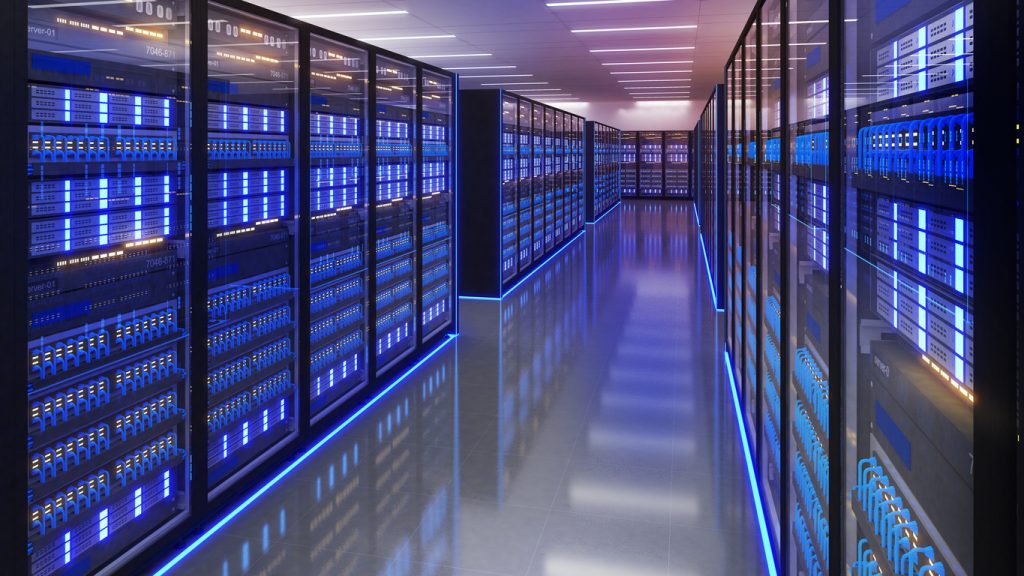
Colocation (or ‘colo’ for short) is an IT infrastructure strategy where you rent data center space from a colocation provider, and use that space to host your own physical servers.
The colocation provider manages the data center and takes care of power, cooling, networking and security at the facility. You own, control and manage the server itself.
Colocation gives you the benefits of self-owned, self-managed hardware – just like owning and running your IT on premises – but you don’t need to build your own data center, or worry about providing sufficient power, cooling and bandwidth for your equipment.
Why choose colocation? Who needs it?
From compliance to cost reduction, colocation can be an ideal IT strategy in many different scenarios. The Patmos team has years of experience providing colocation services: in our view, these are the top five reasons why companies choose colocation over other IT strategies.
- Compliance and control (you need to own the hardware)
Retaining ownership and control of the hardware is one of the biggest factors in choosing colocation over cloud, especially for companies working with sensitive customer data, or developing new IP, or working in regulated industries. In these cases, hosting your applications and data on servers owned by third parties, or that are shared with multiple tenants, may not be appropriate or even legally viable. You need to own the hardware.
Facilities compliance can also be a factor, if you are required to host your IT infrastructure in locations compliant with SOC, ISO or PCI standards, and your own sites don’t have those certifications.
- Resilience and redundancy (you need to protect your operations)
Using colocation to add backup, mirror and disaster recovery locations to your existing IT is another popular colocation use case. With diverse, distributed colocation sites you can protect your business from unexpected outages. This can also be a requirement from insurance companies: if your business is in a region prone to natural disasters (such as hurricanes), it may be mandatory to have distributed IT infrastructure to get any kind of business insurance.
- Strategic business locations (you need IT closer to clients)
Deploying your IT in a regional colocation facility can literally put your applications closer to your teams and your customers, reducing latency, improving productivity, and the customer experience. Using a colocation provider is a fast, easy way to put another dot on your business map.
However, proximity isn’t just about physical distance – it is equally about network latency. If you are targeting customers in Florida, for example, having your server in Florida might seem like be a good starting point – but if the facility doesn’t have excellent networking, the end user experience may not be optimal.
One real-world customer we work used Patmos to overcome just that challenge. It’s a call center business based in Miami: they found that moving their servers to our Dallas facility actually delivered a substantial improvement in call quality, because our network speed and redundancy was superior.
- Outgrowing your premises (you need a bigger boat)
Sometimes colocation is just the best way to support a growing business. You start with a modest amount of equipment that you run on your premises, whether it’s under a desk, in an IT cupboard, or in a dedicated server room.
As you grow, your IT needs grow with you, and many companies reach a point where it is no longer feasible to operate the equipment on-site. Usually, that’s because you’ve exceeded the space, power and cooling available at your site. Access to reliable power is a particular concern for businesses in the US today. Colocation enables you to retain control and ownership of your IT infrastructure, but use specialist off-site facilities to host it – where power redundancy is built in.
- Transition from hyperscale (you need to save money)
Last but not least, colocation is a popular option for companies looking to reduce the cost of services they are currently running in hyperscale cloud platforms such as AWS, Azure or Google Cloud.
This often happens in businesses that have scaled beyond start-up phase. As a small business, cloud may have offered a quick and relatively easy solution for IT infrastructure, but at scale, the micro-services model and highly variable, unpredictable costs became unsustainable.
Switching to self-owned IT infrastructure offers a more predictable, stable OPEX model, and using colocation you still have a partner taking care of the physical data center infrastructure, power, cooling and security.
What colocation features are important?
What should you look for in a colocation provider? We’ve touched on most of the important colocation features in the use cases above, but let’s summarize and add a few more here:
Physical locations
The physical locations available will be an important consideration for customer proximity, latency and disaster recovery mitigation. There are many colocation providers offering a single physical location, and that’s fine: you may be happy managing a mix of providers to cover the locations you need. However, it can make more sense to partner with a colocation provider that offers multiple locations, not just to reduce the management overhead, but to simplify scaling when you need to expand to new regions.
Carriers and networking
Closely related to physical location, the number of network carriers and the bandwidth available at a colocation facility is vital. Look for blended bandwidth and colo providers who have deep network peering relationships, and connections to Internet exchanges. You need as much flexibility and redundancy as possible in the networking set-up, as well as raw performance from high-speed ethernet and fiber.
Power and cooling redundancy
Not all data centers are created equal! Reliable IT infrastructure needs reliable power, so your colocation provider should have built-in redundancy (N+1 or better) and connections to multiple power providers, as well as UPS facilities. And, of course, should be able to power 20A or 30A set-ups and 100kW+ cabinets with ease. You may not need it today, but the overhead gives you room to scale in the future.
Physical security
All good colo providers will invest in physical security to protect your servers – after all, they are YOUR servers. Look for multi-factor physical access with biometric authentication, CCTV/video surveillance with at least 90 days of recorded footage, on-site 24×7 security teams, robot surveillance and more.
Certifications
If compliance is important to your business or required for the industry you work in, you need a colocation provider with the correct data center certifications: SOC2, SOC3, ISO 9001, ISO 27001, ISO 14001, and PCI-DSS are good starting points, as well as any industry-specific standards your business requires.
Patmos colocation services
At Patmos we have years of experience managing colocation hardware for clients ranging from small businesses, to other service providers, and medium-to-large enterprises.
Colocation for Small and Medium Businesses
Our colocation services offer single rack servers through to whole cabinets at Patmos-owned facilities, that are strategically located in Phoenix, Dallas, and Kansas City – with multiple carriers, blended bandwidth, N+1 to N+N redundancy, and stringent physical security measures.
Colocation for Enterprise
At enterprise scale, colocation is more about occupying multiple aisles in a data center rather than rack space or cabinets (often, it’s even an entire data center). The main enterprise colocation use case today is for hyperscale, high-density AI cloud infrastructure: GPU servers with the highest power requirements, that need custom cooling and bespoke cabinet designs.
It is “just” colocation, from one point of view, but at this level of scale and customization we treat this as a separate AI Campus / high-density datacenter service at Patmos.
Want to discuss your colocation needs?
We’re happy to help! Visit our colocation page, or our AI Campus page, and get in touch there for more information.